
Hot-dip galvanizing is a core process for steel strip corrosion protection and is widely used in many fields. The three main stages—annealing, galvanizing, and cooling—are interconnected, each playing a crucial role in “laying the foundation, determining quality, and ensuring shaping.” Currently, many factories experience frequent problems such as steel strip oxidation, uneven zinc coating, and peeling due to poor process coordination and unreasonable parameters. This reduces product competitiveness and increases production losses. This article focuses on practical key points and provides solutions.
Detailed breakdown of the entire hot-dip galvanizing process
Annealing treatment: A prerequisite for ensuring the quality of galvanizing
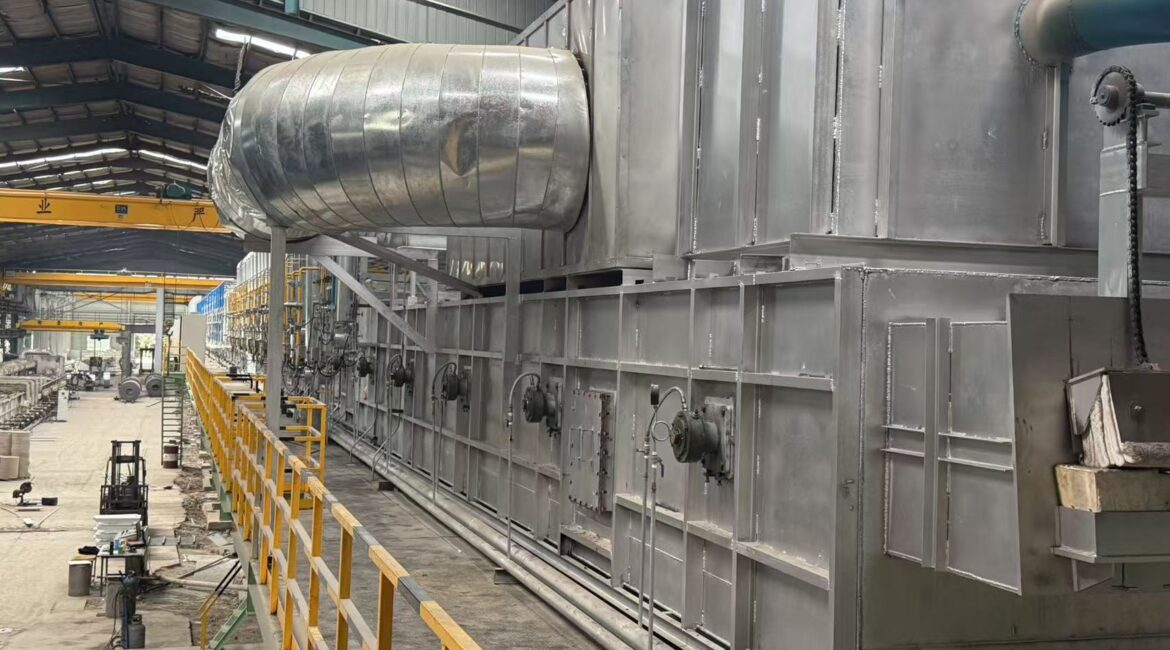
Annealing is a crucial preliminary process for preventing oxidation of hot-dip galvanized steel strip and improving zinc layer adhesion. Its core purpose is to remove scale and impurities from the steel strip surface and relieve internal stress, preparing it for galvanizing.
Core parameters (suitable for mainstream working conditions): Annealing temperature 700℃-750℃ (approximately 720℃ for carbon steel, 730℃-750℃ for alloy steel); holding time 0.5-2 hours (thin strip ≤1mm, thick strip >1mm); nitrogen + hydrogen mixed atmosphere in the furnace (hydrogen content 5%-10%, purity ≥99.99%). These are the core requirements of the hot-dip galvanizing annealing process.
Practical key points: The steel strip enters the furnace at a constant speed (0.8-2 m/s), temperature and humidity are monitored in real time, and after annealing, it is slowly cooled to 450℃-460℃ to be suitable for galvanizing; Common problems: severe oxidation (adjusting the atmosphere, reducing the heating and cooling rate), uneven hardness (calibrating temperature control parameters).
Galvanizing treatment: The core process that determines the quality of the zinc coating
Galvanizing is the core of hot-dip galvanizing, directly determining the thickness, smoothness, and adhesion of the zinc layer. The core process involves a metallurgical reaction between the steel strip and the molten zinc, forming a double-layer protective structure of a zinc-iron alloy layer and a pure zinc layer, thus avoiding the problem of uneven zinc coating in hot-dip galvanizing.
Key parameters: Zinc bath temperature 450℃±3℃ (standard for hot-dip galvanizing zinc bath temperature control); aluminum content 0.18%-0.22% (adjustment range for aluminum content in the hot-dip galvanizing zinc bath); steel strip immersion time 3-5 seconds, zinc coating thickness 80-120μm (controlled by air knife).
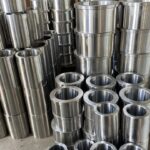
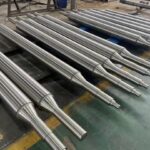
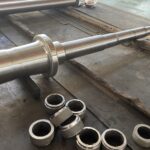
Practical operation and equipment adaptation: Removing impurities from the steel strip before it enters the zinc pot, gently stirring the zinc liquid to prevent zinc dross from floating; controlling the position of the submerged roller and stabilizing roller to prevent deviation (techniques for using hot-dip galvanizing submerged rollers); precise temperature control with W-type/double P-type radiant tubes (adaptation of hot-dip galvanizing radiant tubes), and sealing the furnace nose to prevent oxidation of the zinc liquid.
Cooling treatment: The crucial final step in solidifying the zinc coating
Cooling is crucial in determining the adhesion and surface texture of the zinc coating, and is key to preventing peeling of the hot-dip galvanized zinc layer. The core objective is to allow the zinc layer to solidify quickly, preventing sagging, cracking, and deformation of the steel strip.
Key parameters: Utilizing a “wind cooling followed by water cooling” process (the core of the hot-dip galvanizing cooling technology), the steel is air-cooled to below 300℃, then water-cooled with water at a temperature of 20℃-30℃, resulting in a final strip temperature of ≤50℃.
Practical focus: Controlling the steel strip tension and coordinating with the three-roll six-arm system to prevent deformation (suitable for hot-dip galvanizing three-roll six-arm systems); using spray water cooling to prevent direct impact, and drying thoroughly after cooling to prevent corrosion; Common problems: peeling (adjusting cooling speed), deformation (calibrating tension and equipment).
End-to-end process integration and parameter collaborative optimization
Key connection points: The temperature difference between annealing and galvanizing is ≤ ±5℃, cooling begins within 10 seconds after galvanizing, and the strip steel speed is synchronized throughout the entire process (0.8-2 m/s), achieving seamless connection.
Collaborative optimization: Adjust parameters based on steel strip specifications (slow cooling for thick strips, increased speed for thin strips); implement full-process online monitoring and establish a parameter database to achieve standardized production and improve the efficiency of the hot-dip galvanizing process.
Common Issues and Emergency Procedures Throughout the Entire Process
Focusing on four types of frequently occurring problems, we aim for rapid resolution and reduced losses:
- Zinc bath temperature fluctuations: Adjust the radiant tube parameters, slow down production, and calibrate to 450℃±3℃
- Steel strip deviation: Calibrate the submerged roller and the three-roll six-arm system, and adjust the tension and speed
- Zinc coating peeling: Optimize cooling parameters and investigate the annealing/galvanizing process
- Steel strip oxidation: Improve the purity of the annealing atmosphere and check the furnace body for leaks
The three key stages of annealing, galvanizing, and cooling are all indispensable. Standardized procedures and optimized parameters are crucial for improving quality and reducing costs. It is recommended that factories establish standardized record-keeping systems, strengthen personnel training and equipment inspections, select suitable core equipment such as radiant tubes and furnace rollers, and optimize hot-dip galvanizing process parameters based on the key points discussed in this article to enhance product competitiveness.