
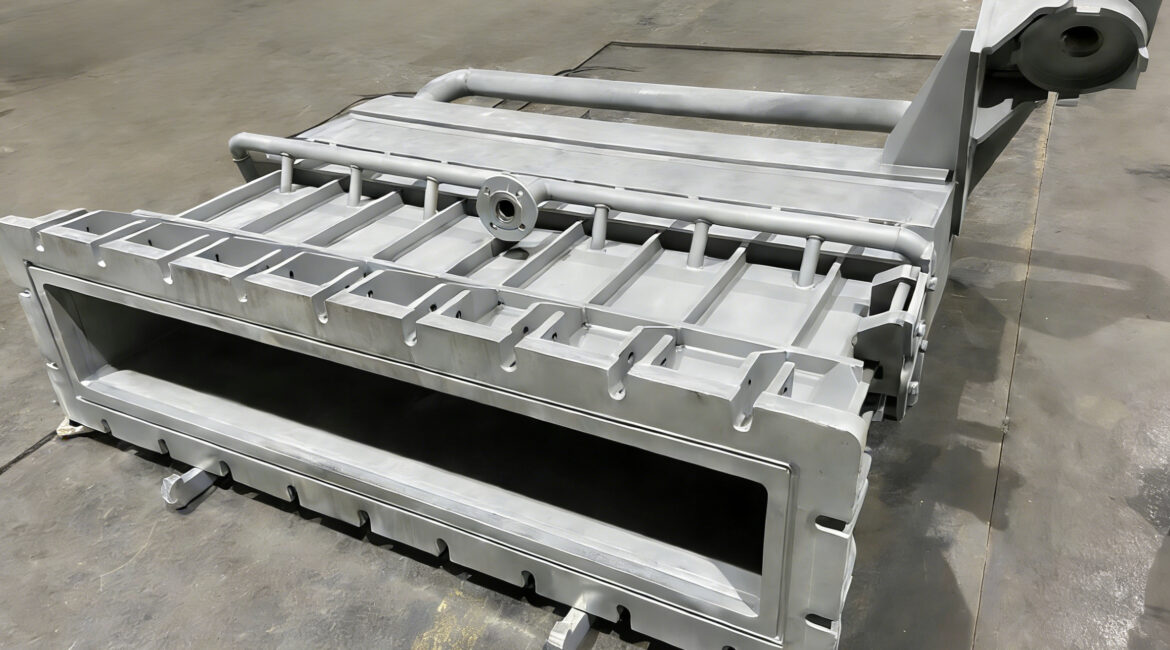
In hot-dip galvanizing production lines, the furnace nose is a core component connecting the annealing furnace and the zinc pot, and its operating condition directly determines the surface quality of the steel strip. Zinc dross accumulation and sealing performance failure in the furnace nose are common problems in the industry, easily leading to defects such as zinc particles and oxide spots on the steel strip, increasing the scrap rate and equipment wear. This article focuses on practical operations, breaking down the zinc dross cleaning process and sealing optimization solutions to help galvanizing plants achieve efficient cost reduction and quality improvement.
In-depth analysis of the causes and hazards of zinc slag formation in blast furnaces
Solving the zinc dross problem requires first identifying its causes. Its formation is the result of a combination of factors including process, equipment, and gas protection. Accurate root cause analysis is necessary for effective control at the source.
The three main factors contributing to the generation of zinc slag
Firstly, fluctuations in the composition and temperature of the zinc bath are the main causes. The temperature needs to be stable at around 450℃ (fluctuation ≤ ±5℃), and the aluminum content should be controlled between 0.18% and 0.22%. Exceeding this range will accelerate the oxidation of the zinc bath, generating dross and bottom sludge. Secondly, insufficient inert gas protection (nitrogen-hydrogen ratio of 9:1, purity ≥99.99%), gas leakage, or unstable pressure can lead to a surge in zinc dross. Finally, secondary contamination caused by impurities on the steel strip surface and wear debris from the furnace rollers will increase the difficulty of zinc dross removal.
The cascading hazards of zinc dross and seal failure
Zinc dross and seal failure create a chain of hazards: at the product level, it leads to steel strip downgrading and a decrease in the pass rate of high-end products; at the equipment level, it causes wear on furnace rollers, clogs pipelines, and shortens component lifespan; and at the production level, it necessitates unplanned shutdowns for cleaning, disrupting the production rhythm and resulting in capacity losses.
Blast furnace zinc slag cleaning: Practical procedures for different scenarios (Safe and efficient)
Zinc slag removal must follow the principles of “safety first, classified treatment, and standardized acceptance,” and should be carried out according to the categories of floating slag, wall slag, corner slag, and bottom slag to avoid equipment damage.
Preparation work before cleaning
Before cleaning, it is necessary to take protective measures (wear heat-resistant equipment), coordinate with production schedules (integrate with maintenance plans and scheduled downtime), and inspect the equipment (shut down the cooling system and air supply, and lower the liquid level to a safe level) to avoid safety risks and production losses.
Practical steps for cleaning zinc slag based on its type
The cleaning process is tailored to the specific type of zinc residue, ensuring thorough cleaning without damaging the equipment:
- Sludge removal: Use a vacuum sludge removal device to gently move along the liquid surface to clean the sludge. If the sludge is thick, separate it first before suctioning it away. The removal rate should be ≥95%, avoiding disturbing the bottom sediment.
- Wall deposits: Gently scrape the inner wall and the area around the seals with a high-temperature resistant stainless steel scraper. For hard deposits, first loosen them with nitrogen gas purging. Violent cleaning is strictly prohibited.
- Cleaning hard-to-reach areas: Use a fine-bristled brush and compressed air to clean the gaps in the connectors, and disassemble the connecting parts if necessary to ensure there is no visible residue.
- Bottom dross: Clean every 15 days under light load and every 7 days under heavy load. After draining some of the zinc liquid, remove the bottom dross, then replenish with new zinc liquid and recalibrate the parameters.
Acceptance criteria and concluding tasks after cleaning
Acceptance criteria: The inner walls and crevices must be free of residue, and the equipment must be undamaged. The final steps include collecting waste materials, resetting the equipment, and testing the air supply lines. Production can resume after the parameters stabilize.
Blast furnace nose seal optimization: A comprehensive upgrade plan from structure to materials
The seal at the furnace nozzle directly affects the effectiveness of gas protection. Seal failure is often due to structural, material, or installation problems, and optimization is needed in all three areas.
Common sealing problems and root cause analysis
Common sealing problems include leakage, aging, and wear, stemming from improper mating clearances (leakage if too large, wear if too small), poor material weather resistance, and installation deviations. These issues require targeted solutions.
Optimized sealing structure design
Structural optimization: The gap is controlled between 1.5mm and 2mm, with adjustable sealing baffles; a secondary sealing chamber is added to form a double-layer protection, and a monitoring port is installed at the top for real-time pressure control.
Recommendations for selecting sealing materials
Material selection: High-temperature resistant fluororubber (temperature resistance up to 500℃) and ceramic fiber seals are preferred, with a lifespan of 3-4 months. Ceramic fiber is selected for high-temperature applications, while fluororubber is chosen for normal operating conditions, matching the specific application requirements.
Key points for sealed installation and commissioning
Installation and commissioning: Uniformly compress the seals, and use high-temperature resistant sealant at the interfaces; perform a leak test at a pressure of 0.02MPa-0.03MPa, with a pressure drop of ≤0.005MPa per hour considered acceptable; monitor the hydrogen concentration during operation (≥5%).
Routine maintenance and long-term control: Reducing the recurrence of zinc slag and sealing problems
Zinc slag and sealing issues require long-term management. Mechanisms should be established in three areas—inspection, process control, and emergency response—to ensure the stability of the production line.
Establish a regular inspection mechanism
Daily inspections include checking seals, gas line parameters, and zinc dross levels; regular maintenance (removing dross every 7 days, replacing seals every 30 days, and conducting a comprehensive overhaul every 90 days) is performed to prevent problems from accumulating.
Coordinated optimization of process parameters
Optimize process parameters: zinc bath temperature 450℃±3℃, aluminum content 0.18%-0.22%, inert gas ratio 9:1, purity ≥99.99%, to reduce zinc dross from the source.
Emergency response plan for common problems
Emergency procedures: In case of leakage, immediately reduce speed and investigate the cause; if severe, stop the machine and replace the affected parts; if zinc dross increases sharply, first remove the floating dross and calibrate the parameters, and if necessary, stop the machine for cleaning ahead of schedule.
The core principles of zinc dross removal and sealing optimization in the galvanizing furnace are “controlling the source, strengthening practical operations, and establishing long-term solutions.” Hot-dip galvanizing emphasizes sealing and gas protection, while electro-galvanizing focuses on controlling impurities in the zinc solution; small-scale production facilities choose cost-effective materials and manual tools, while large-scale facilities utilize automated equipment to improve efficiency.
High-quality furnace nozzles are fundamental for optimization. Professionally customized equipment offers better compatibility and reduces the risk of zinc dross formation and sealing failures. If you encounter difficulties with selection or cleaning, a customized solution based on your production line parameters can be implemented to improve production efficiency.