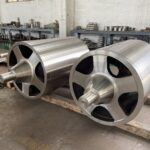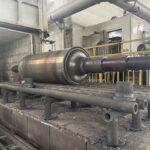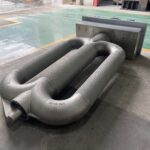

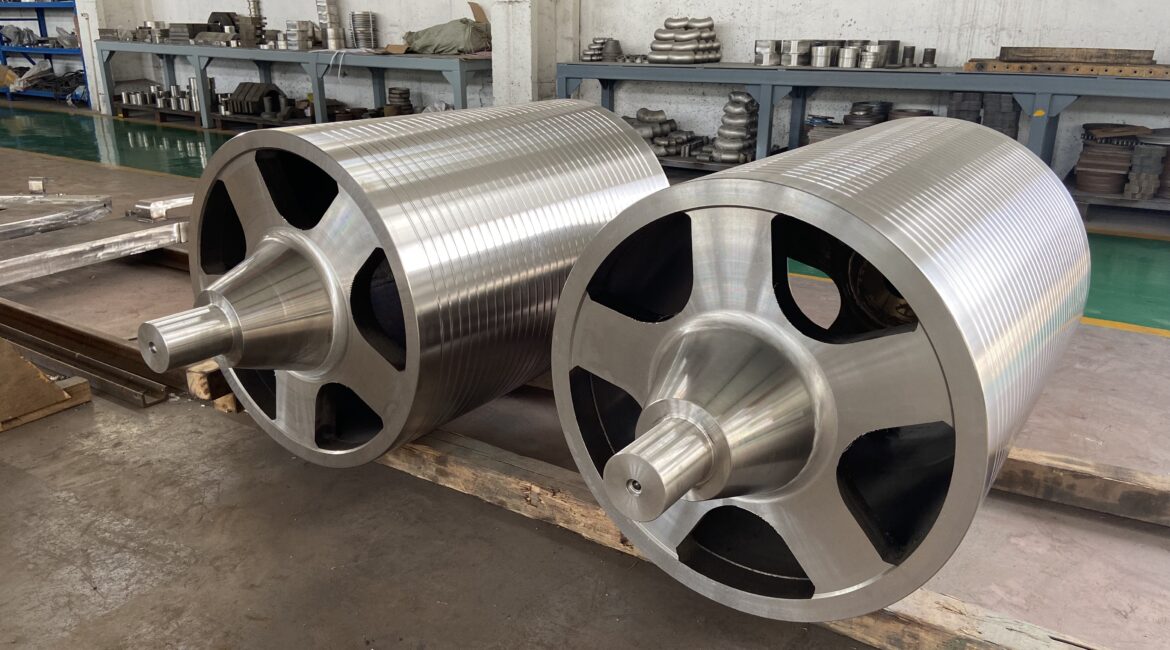
Recently, the prices of key alloying elements for heat-resistant steel—such as nickel, molybdenum, and chromium—have remained at persistently high levels. Consequently, the procurement costs for zinc pot spare parts—including sinker rolls and stabilizer rolls—have generally risen by 10% to 20%. The initial reaction of many production supervisors at galvanizing lines has been to seek out cheaper suppliers in an effort to drive down purchasing prices.
However, within this cycle, there is a more rational strategy: hedging against the cost pressures arising from rising raw material prices by extending the service life of sinker rolls.
Let’s Do the Math: Is Buying Cheap Really Cheap?
When purchasing sinker rolls, many factories focus solely on the “unit purchase price”; however, what truly impacts profitability is the cost per ton of steel.
| Comparison Item | Option A: Low-Cost Procurement | Option B: Long-Life Solution |
| Unit Purchase Price | 100% | 120% |
| Life expectancy | 3 months | 6 months |
| Number of Line Stoppages for Changeovers | Twice | Once |
| Slagging leads to a high reject rate | Relatively high | Lower |
Although Option B carries a unit price 20% higher, it requires replacement only twice a year; consequently, line downtime losses are halved, and the scrap rate is lower. When factoring in line downtime losses, scrap losses, and procurement costs, the cost per ton of steel under Option B is often lower.
During a cycle of rising raw material costs, this logic becomes even more critical: under Option A, the procurement price is increasing while the product’s lifespan remains unchanged; under Option B, however, the extended lifespan effectively serves as a free hedge against the rising cost of raw materials.
What “Eats Away” at the Service Life of a Sink Roll?
To extend your lifespan, you must first understand how it is depleted.
- Zinc Bath Corrosion: Upon prolonged immersion in a zinc bath at 450°C–470°C, zinc atoms continuously erode the substrate.
- Slagging and Zinc Adhesion: Zinc dross adheres to the roll surface, compromising strip quality and accelerating scraper wear.
- Thermal Fatigue: Temperature fluctuations resulting from furnace start-ups and shutdowns lead to the propagation of microcracks.
- Mechanical Wear: Prolonged contact with the scraper, particularly when scraper pressure increases following slagging.
Sink rolls with a short service life often fail to hold up across these four dimensions.
Four Technical Solutions to Help Extend Sink Roll Lifespan
1.Material Selection: It should be “right,” not necessarily “expensive.”
Material requirements vary depending on the specific zinc bath composition and operating conditions. Based on actual operating environments, we recommend suitable zinc-corrosion-resistant materials to identify the most cost-effective solution.
2.Surface Coating Technology: Outfitting the Rollers with “Armor”
Utilizing the High-Velocity Oxy-Fuel (HVOF) thermal spraying process, the coating exhibits high density and strong bonding strength; it reduces the corrosion rate by molten zinc by over 50% while simultaneously demonstrating excellent resistance to slag accumulation.
3.Welding and Heat Treatment: “Firmly Welding” the Weak Links
The weld seam constitutes the weakest point. By employing a process combining TIG welding with multi-layer, multi-pass techniques—followed by a comprehensive post-weld stress-relief heat treatment—the risk of thermal fatigue cracking is significantly reduced.
4.Dimensional Accuracy and Dynamic Balancing: Ensuring the Roller “Runs Smoothly”
Roundness tolerance is controlled within 0.05 mm, and dynamic balance meets the G6.3 standard. Higher precision ensures smoother operation and minimizes abnormal wear.
During a Cycle of Rising Raw Material Prices: Four Recommendations for Purchasing Submerged Rolls
- Establish a Service Life Log: Record the installation and removal dates, reasons for removal, and cumulative tonnage produced for each roller; use this data to evaluate supplier performance.
- Please clearly specify the operating conditions: zinc bath composition, temperature, steel strip specifications, production line speed, and furnace start-up/shutdown frequency—the more detailed the information, the more precise the proposed solution will be.
- Evaluate Technical Capabilities: Focus on whether the supplier possesses capabilities in material testing, coating preparation, heat treatment, and quality control systems—rather than merely comparing prices.
- Consider Repair and Remanufacturing: If the roller substrate remains intact but the coating has failed, it can be recoated. The cost is only 40%–60% of that of a new unit, while its service life can reach over 80% of a new unit’s.
We cannot control the fluctuations in raw material prices. However, the “tonnage of steel produced” by each sink roll is something that can be optimized.
Through scientific material selection, high-performance coatings, rigorous welding and heat treatment, and precision machining with dynamic balancing, we can significantly extend the service life of sink rolls, thereby achieving lower per-ton steel production costs during periods of rising raw material prices.
If you are troubled by the short service life and high procurement costs of your sink rolls, we invite you to bring your operating data to us for a discussion. We will help you calculate the economic benefits of extending their service life.