
In the high-temperature operating sections of hot-dip galvanizing and continuous annealing lines, hot tension rolls are critical components for controlling strip tension and stabilizing the strip’s running path. Steel mills and galvanizing plants frequently encounter production issues such as strip mistracking, wrinkling, edge waves, surface scratches, and significant tension fluctuations. In most cases, these problems do not stem from equipment parameter settings but rather from wear, deformation, and a loss of precision in the hot tension rolls caused by prolonged operation at high temperatures.
To help enterprises quickly troubleshoot issues and minimize losses due to downtime, the following section provides a detailed overview of the most common faults associated with hot tension rolls in industrial production. It outlines the operational causes, potential impacts, and comprehensive solutions for each, serving as a useful reference for routine inspections, maintenance, and component replacement on production lines.
Fault symptoms: During high-speed operation of the production line, the steel strip oscillates vertically, and tension fluctuates; the finished product exhibits wavy edges, creases, and uneven tightness, accompanied by frequent alarms for abnormal tension. Inspection after shutdown reveals slight bending of the hot tension roll body, a non-circular roll surface, and radial runout exceeding permissible limits.
High-temperature deformation and excessive radial runout of the hot tension roll cause strip oscillation and unstable tension
Cause of failure: The hot tension roll operates in a high-temperature furnace zone for extended periods. Roll bodies made of ordinary carbon steel or materials with low heat resistance exhibit poor resistance to high-temperature deformation; prolonged exposure to heat causes creep, leading to shaft bending and a loss of concentricity. Additionally, continuous operation under load exacerbates roll eccentricity and causes runout to exceed permissible limits.
Solution: In the short term, the issue can be temporarily mitigated by fine-tuning tension parameters and reducing operating speed, though this does not provide a permanent cure. A definitive solution requires replacing the unit with an industrial heat-resistant alloy tension roll. This involves using high-temperature resistant, creep-resistant materials and precision machining to ensure roll concentricity and resistance to bending or deformation at high temperatures; this stabilizes strip tension at the source, thereby eliminating problems such as vibration, mistracking, and wrinkling.
Oxidation and peeling, wear and spalling on the roll surface, causing scratches on the strip steel surface
Symptoms: The strip surface exhibits regular scratches, indentation marks, black spots, and a pitted texture; the surface finish of the finished product deteriorates, and the defect rate increases. Inspection of the hot tension roll surface reveals oxidation and peeling, corrosion, localized spalling, and rough wear.
Cause of failure: The high-temperature furnace environment is highly oxidizing, and the standard tension rolls lack surface hardening treatment, resulting in poor heat and oxidation resistance. Prolonged high-speed friction against the steel strip causes rapid wear of the roll surface’s wear-resistant layer, leading to peeling and delamination, while hard particles directly scratch the strip surface.
Solution: Periodically shut down the line to remove the oxide layer from the roll surface; minor wear can be remedied through polishing. However, if severe surface peeling or delamination occurs, direct replacement with a new hot-tension roll for the galvanizing line is recommended. The hot-tension rolls manufactured by our facility undergo precision polishing and surface hardening treatments to ensure a dense, smooth finish. They offer excellent resistance to high-temperature oxidation and high-speed friction, resisting peeling or flaking during prolonged use and effectively preserving the surface quality of the steel strip.
Uneven tension transmission across the hot tension roll leads to strip wandering, strip overlapping, and uneven wear
Symptom: The steel strip consistently drifts to one side, resulting in severe edge wear. During production, issues such as strip overlapping, edge rubbing, and strip jamming frequently occur, compromising the stability of continuous production. Adjustments to the steering system have yielded no significant improvement.
Cause of failure: Insufficient machining precision of the hot tension roll, lack of concentricity between the shaft ends at both sides, uneven roll surface texture, and significant deviation in installation leveling. These factors result in uneven distribution of force and friction across the roll surface, causing the steel strip to shift and experience continuous tracking deviation.
Solution: Re-calibrate the equipment’s installation level and inspect bearings and housings for looseness or wear. For aging hot tension rolls that fail to meet precision standards, it is recommended to replace them with high-precision, finely machined rolls; strictly control roll concentricity, flatness, and balance to ensure uniform surface friction and stable tension output, thereby thoroughly resolving the issue of strip deviation.
The hot tension roll is binding or rotating sluggishly, causing scratching of the steel strip and tension overload
Fault symptoms: Increased running resistance on the production line and excessively high tension load; the steel strip moves jerkily and slips intermittently, exhibiting tensile deformation and streak-like scoring, with severe cases resulting in line stoppage.
Causes of failure: high-temperature aging, binding, and excessive dust and slag accumulation in the bearings at both ends; improper fit clearance at the shaft ends, leading to seizure due to high-temperature deformation; and increased rotational resistance caused by a lack of long-term maintenance, resulting in unsmooth rotation of the heat-tensioning roll.
Solution: Regularly clean dust and oxide scale from bearing housings, replace with high-temperature-specific lubricant, and promptly replace worn-out bearings. For heat-tensioning rolls with deformed shaft ends or compromised fit precision, complete replacement is recommended to avoid repeated breakdowns and downtime.
Summary of the Root Causes Behind the Short Service Life and Frequent Failure of Hot-Stretching Rolls
Many enterprises experience short service lives and frequent replacement needs for hot tension rolls, primarily due to three factors: first, material incompatibility with high-temperature operating conditions—specifically, the use of rolls designed for ambient temperatures or low heat resistance instead of industrial high-temperature hot tension rolls; second, poor machining precision, with concentricity and balance failing to meet standards, leading to accelerated wear and deformation once installed; and third, a mismatch between the roll’s dimensions or load-bearing specifications and the thickness and line speed of the processed steel strip.
Recommendations for Daily Maintenance of Hot Stretch Rolls (Effectively Extending Service Life)
- Regular Inspections: Check the operating status of the hot tension rolls during every shift—monitoring for issues such as vibration, abnormal noise, mistracking, or unstable tension—to ensure early detection and prompt resolution.
- Regular cleaning: Periodically remove scale, dust, and impurities from the roll surfaces to prevent hard particles from adhering and scratching the steel strip.
- Regular maintenance: Apply high-temperature-specific grease to bearings and rotating parts to prevent seizing or binding caused by dryness at high temperatures.
- Periodic Inspection: Check the concentricity and surface wear of the roller body during each cycle; promptly replace rollers if deformation or wear exceeds tolerance limits to prevent mass production of defective goods caused by operating with compromised equipment.
Advantages and Supporting Services for Our Hot-Stretching Rollers
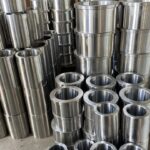
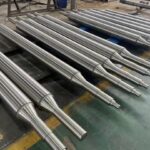
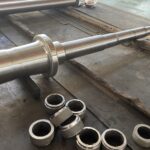
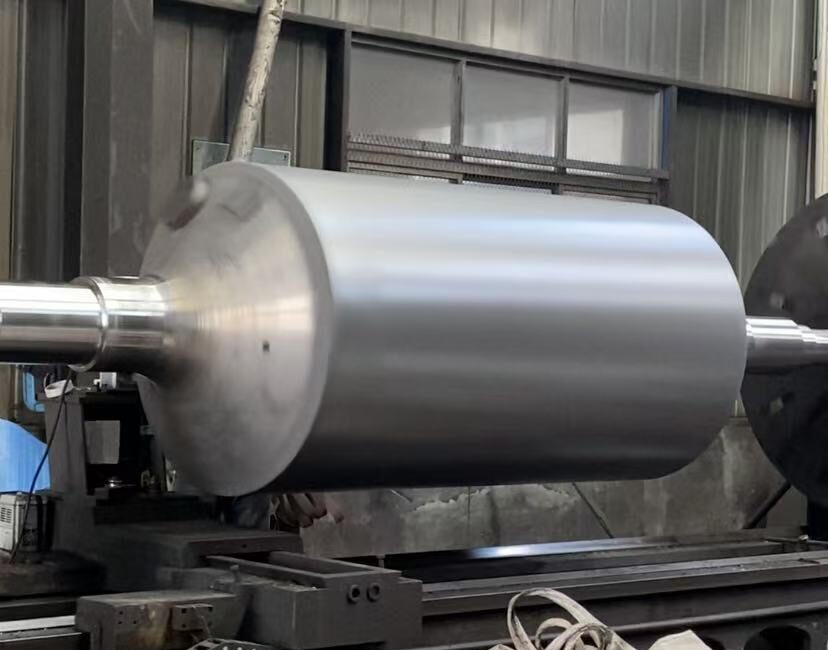
Our factory specializes in the production of industrial hot tension rolls—including those for galvanizing lines and annealing furnaces—specifically engineered for demanding operating conditions involving high temperatures, high speeds, and high tension. Manufactured using highly heat-resistant, wear-resistant, and oxidation-resistant alloys, these rolls undergo precision casting and high-precision machining. They feature excellent surface flatness and high concentricity, maintaining their shape even at elevated temperatures. These rolls effectively resolve issues such as unstable line tension, strip wandering, surface scratching, and frequent downtime.
We support the customization of non-standard specifications to fit galvanizing lines and continuous annealing lines from major brands, ensuring a precise fit and long service life. Additionally, we provide comprehensive one-stop services—including troubleshooting, model selection, installation guidance, and routine maintenance advice—to help enterprises reduce O&M costs and enhance production stability.