
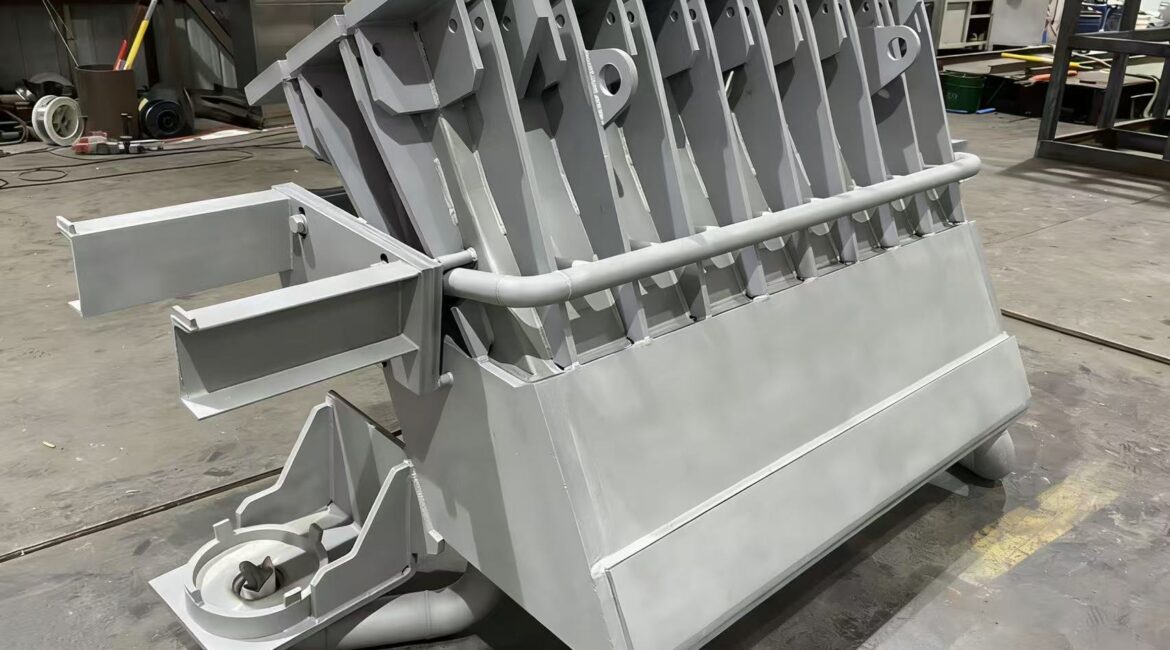
In the hot-dip galvanizing process, the furnace nose serves as the critical conduit through which the steel strip enters the zinc pot. The flow dynamics of the molten zinc within the furnace nose directly impact the quality of the zinc coating, the volume of zinc dross generated, and the continuous operating time of the production line. For a long time, a “single-pump zinc circulation” system was the standard configuration for many older production lines. However, an increasing number of facilities are now transitioning to dual-pump circulation systems—whether configured with pumps positioned on the same side or on opposing sides.
Why is the “single-minded” single-pump design being phased out? What exactly makes the dual-pump configuration superior? In this article, we will break down the differences from a technical perspective.
I. Single-Pump Zinc Extraction: Simple, Yet Riddled with “Dead Zones”
The structure of a single-pump zinc extraction system is quite simple: a single pump draws molten zinc from one side of the furnace nose and returns it to the interior of the nose via a circulation pipeline. It is indeed viable for use on small-scale, low-speed production lines. However, once the line speed increases and the strip width expands, the inherent limitations of the single-pump configuration become apparent:
1.Flow Dead Zones
After the molten zinc flows out from a single pump outlet, a distinct velocity gradient develops across the cross-section of the furnace nose. Regions situated away from the pump outlet remain nearly “stagnant,” preventing the replenishment of the molten zinc; consequently, the local temperature drops, giving rise to a low-temperature zone.
2.Accumulation of Zinc Dross
The flow of molten zinc within dead zones is extremely poor, causing iron-zinc compounds and suspended dross to settle rapidly and adhere to the inner walls of the furnace nose. Within a matter of days, accretions form that scratch the surface of the steel strip.
3.Frequent shutdowns for slag removal
Single-pump systems are often forced to halt production lines once every one to two weeks to manually clear slag buildup from inside the furnace nose. Each such shutdown entails a loss of production output, increased labor costs, and higher energy consumption for heating.
To summarize the single pump’s predicament in a single word: a “one-track-mind” cycle—it can manage the left side, but then it cannot manage the right.
II. Dual-Pump Zinc Extraction: Bringing the Zinc Bath to Life
A dual-pump system is not merely a matter of adding an extra pump; rather, it involves a complete redesign of the flow patterns within the furnace nose. Depending on the on-site equipment layout and the width of the steel strip, dual-pump configurations are further categorized into two schemes—same-side dual pumps and opposite-side dual pumps—yet their core logic remains consistent: to generate forced convection and eliminate dead zones.
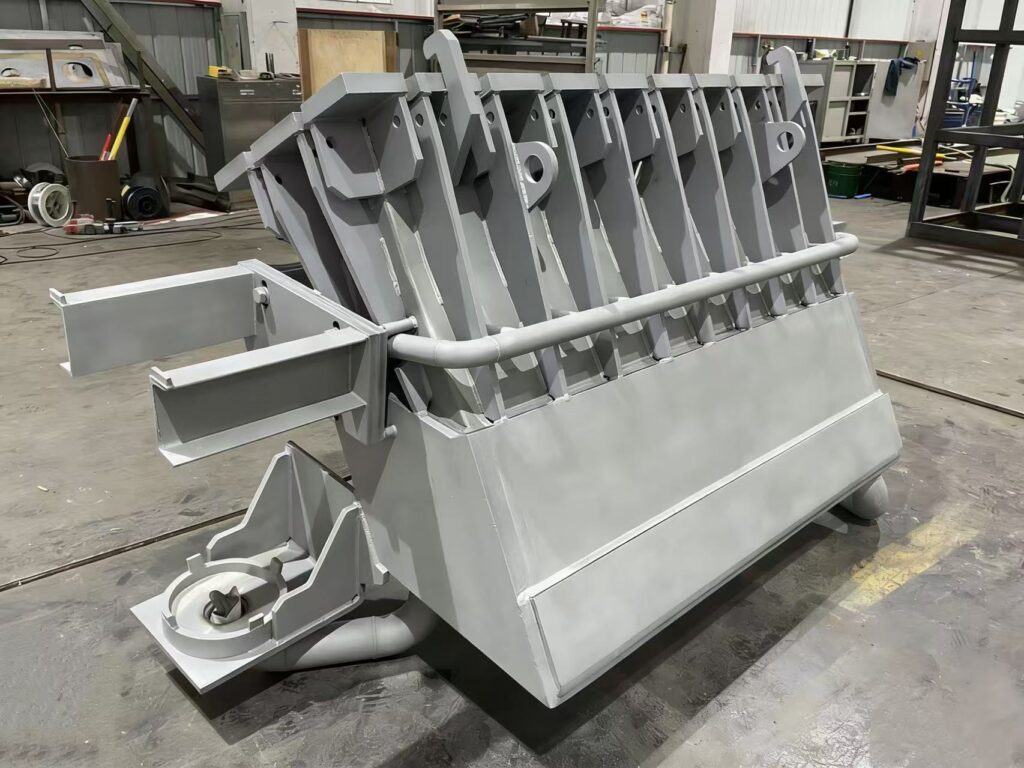
1.Same-Side Dual Pumps: An Efficient Choice for Compact Production Lines
The two pumps are installed on the same side of the furnace nose; however, their outlet orientations and circulation paths have been specially designed:
- One pump is responsible for “pushing,” while the other is responsible for “pulling,” creating a localized circulation loop.
- The molten zinc within the furnace nose is no longer a singular, unidirectional flow, but instead generates a lateral rotational flow field.
Applicable Scenarios: Hot-dip galvanizing lines with limited workshop space and a relatively short furnace nose (e.g., ≤ 3 meters).
Actual Results: Compared to a single-pump system, zinc dross accumulation is reduced by over 50%, and the dross removal cycle is extended to 3–4 weeks.
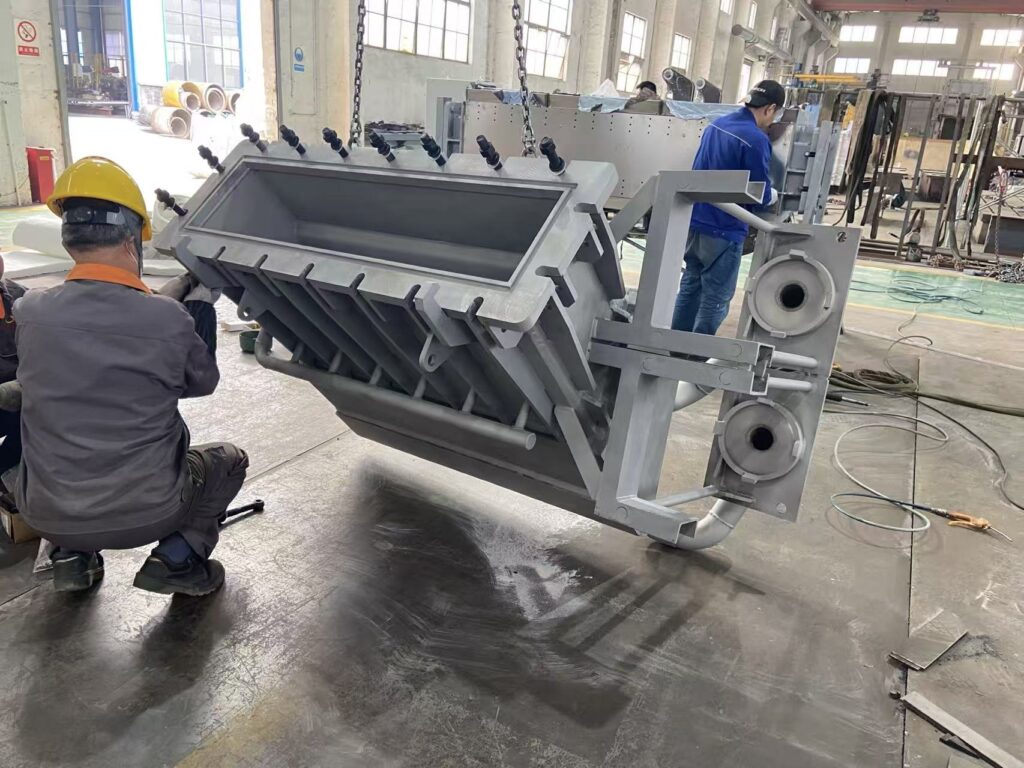
2.Dual Pumps on Both Sides: The “No Dead Zones” Solution for Wide-Format Boards
Two pumps are installed on the left and right sides of the furnace nose, respectively; molten zinc is simultaneously injected from both sides into the furnace nose cavity, creating intense turbulent mixing in the central region.
- Completely eliminate “remote blind spots.”
- The temperature difference across the entire cross-section can be controlled within ±2°C.
- It is particularly suitable for wide strips (over 1.2 meters) and high-speed production lines (strip speed > 15 m/min).
Applicable Scenarios: Hot-dip galvanizing lines for high-quality automotive and home appliance panels.
Actual Results: Zinc coating uniformity has improved, edge dross defects have been reduced by over 80%, and the dross removal cycle can extend to 6–8 weeks.
III. Dual-Pump vs. Single-Pump: A Table Clarifying the Key Differences
| Comparison Item | Single-Pump Zinc Extraction | Dual-Pump Zinc Extraction (Unilateral/Bilateral) |
| Zinc Bath Flow Pattern | Unidirectional flow, with distinct blind spots | Forced convection, covering the entire area |
| Cross-sectional temperature difference | ±5~8℃ | ±2~3℃ |
| Zinc dross accumulation rate | Rapid: noticeable nodulation begins within 3 to 7 days | Slow: slight accumulation occurs within 15–20 days in the ipsilateral system, and after more than 30 days in the bilateral system |
| Slag Removal Shutdown Frequency | Once every 1–2 weeks | Same side: every 3–4 weeks; both sides: every 6–8 weeks |
| Suitable Strip Width | ≤800 mm, Low-speed Line | Supports arbitrary widths, with advantages that are particularly pronounced when exceeding 1 meter |
| Initial Investment | Low | Higher (due to additions to the pump body, piping, and control loops) |
| Long-term Comprehensive Cost | High (Production Downtime Losses + Zinc Consumption + Scrap Rate) | Low (Continuous Production + Reduced Manual Slag Removal) |
IV. Why Your Production Line Needs to Abandon the “Rigid” Approach?
If you are still using a single-pump system for zinc extraction, the following three problems have very likely already caught up with you:
- Product Surface Instability: Zinc granules and zinc scars appear intermittently, resulting in a persistently high customer complaint rate.
- The slag-removal team is voicing complaints: every two weeks, they are required to crawl inside the furnace nose to chip away slag—work that is both physically grueling and unsafe.
- They want to increase speed but dare not: the moment the steel strip speed is increased, zinc dross is dragged onto the strip surface, causing the defect rate to skyrocket.
Structurally, a single-pump system is fundamentally incapable of completely resolving these issues. In contrast, a dual-pump zinc extraction system—particularly the dual-pump configuration with pumps positioned on both sides—enables the molten zinc to circulate dynamically, much like flowing water. This process simultaneously carries away both heat and suspended dross, thereby restoring a clean and clear interior to the furnace nose.
V. What Can Our Factory Do for You?
We specialize in the manufacture of hot-dip galvanizing furnace noses and provide our customers with customized pump system solutions.
- Same-Side Dual Pumps: Optimized for compact production lines, the pump port orientation and piping layout can be designed based on actual on-site measurements to ensure no interference with surrounding equipment.
- Dual Side Pumps: Equipped as standard with wear- and corrosion-resistant impellers, the motors feature independent control, allowing for the adjustment of the speed differential between the two pumps to achieve optimal flow field balance.
- Single-to-Dual Pump Conversion: If you are currently operating a single-pump furnace nose, we offer a retrofit solution. This involves no modification to the main structure of the furnace nose—only the addition of a pump unit, piping, and a control system—with a typical return-on-investment period of less than six months.
We fully recognize that the true competitiveness of hot-dip galvanizing lies not in a single instance of low-cost procurement, but rather in a continuous, stable, and low-zinc-consumption operation—day in and day out.
Conclusion
The “single-minded” approach of single-pump zinc extraction was merely an expedient measure suited to an era of insufficient production capacity. Today’s competitive market, however, demands that production lines operate with stability and high efficiency to produce high-quality galvanized steel sheets. Dual-pump zinc extraction—whether involving precise circulation on a single side or comprehensive coverage across both sides—is rapidly becoming the standard configuration for modern hot-dip galvanizing lines.
If your furnace is still “limping along” on a single pump, it’s time to consider a genuine upgrade.